
EDANA's performed LCA's over the last 3 decades
EDANA and its members have a longstanding tradition of developing and using life cycle assessments (LCA).
During the last 30 years, EDANA has conducted several life-cycle assessments aiming at sustainable development and innovation.
The aim is to strive at continuously improve the environmental performances of products by analysing the environmental impacts associated with a product system from the acquisition of raw material through production, transport, use, end-of-life treatment, recycling and disposal.
Life-cycle assessments ensure that EDANA member companies continuously review and develop new industrial processes, materials or concepts to lessen impacts on the environment.
Ongoing Projects
Coming soon
2016
LCA of nonwoven Hygiene Products (Spunbond)
2013
LCA & Trend Analysis of Baby Diapers
2011
Industrial wipes LCA
2020
Superabsorbent Polyacrylate (SAP) LCA – European production
This study is an update of a Life Cycle Inventory (LCI) conducted in 2014 by the producers of Superabsorbent Polyacrylate (SAP) in Europe. In this study the updated processing information are assessed to enable producers to identify key factors of environmental impact and to take measures to further reduce this impact where possible. The study is based on primary data of the production year 2018 from all four European SAP manufacturers.
PREVIOUS EDITIONS:
2014, cradle-to-gave LCA of SAP baseline year 2013
2009, cradle-to-gave LCA of SAP baseline year 2008
2014
LCA of Superabsorbent Polyacrylate (SAP) – European production
2012
LCA & Trend Analysis of Incontinence Products
2010
Baby wipes LCA
Ongoing Projects
Coming soon
2020
Superabsorbent Polyacrylate (SAP) LCA – European production
This study is an update of a Life Cycle Inventory (LCI) conducted in 2014 by the producers of Superabsorbent Polyacrylate (SAP) in Europe. In this study the updated processing information are assessed to enable producers to identify key factors of environmental impact and to take measures to further reduce this impact where possible. The study is based on primary data of the production year 2018 from all four European SAP manufacturers.
PREVIOUS EDITIONS:
2014, cradle-to-gave LCA of SAP baseline year 2013
2009, cradle-to-gave LCA of SAP baseline year 2008
2016
LCA of nonwoven Hygiene Products (Spunbond)
2014
LCA of Superabsorbent Polyacrylate (SAP) – European production
2013
LCA & Trend Analysis of Baby Diapers
2012
LCA & Trend Analysis of Incontinence Products
2011
Industrial wipes LCA
2010
Baby wipes LCA
EDANA LCA's workshops
The last workshop on LCA's took place in Brussels on 13th February 2020, topics covered were:
- Help master the basics
- Improve knowledge on interpreting results
- Get a better understanding on how to communicate the results effectively
- Get updated on the latest developments to understand its use and evolution in the context of the Product Environmental Footprint (PEF) and EPD International
It was a great opportunity for participant across the value chain to meet and exchange best practices.
Invited guest speakers where :
- Martijn Gipmans from Thinkstep
- Sebastiaan Stiller from EDP international
LCA - Lifetime Achievement Awards
With the EDANA LCA-Lifetime Achievement Award, EDANA wants to recognise and honour the exceptional achievements and efforts of LCA experts. It is traditionally awarded during the annual conference of SETAC, the Society of Environmental Toxicology and Chemistry.
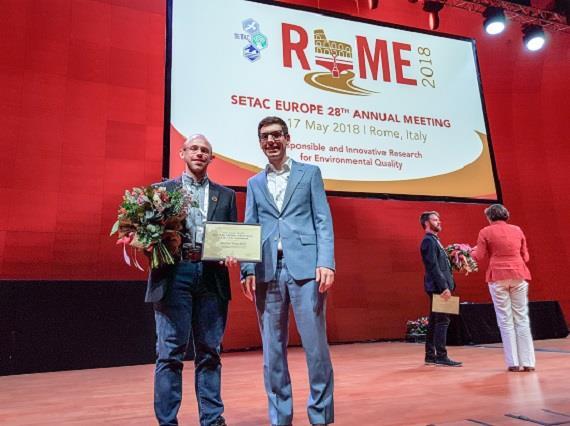
In May 2018, the EDANA LCA - Lifetime Achievement Award was granted to Michael Hauschild.
The award was granted in recognition of Michael’s 25-year body of work in the field of Life Cycle Assessment (LCA) at the Technical University of Denmark (DTU). Michael made lasting contributions in the areas of ecotoxicity in LCA, the assessment of the social sustainability dimension in a life cycle perspective and, more recently, the introduction of an absolute sustainability perspective into LCA.
In 2020, the award was granted in recognition of Dr. Frischknecht’s outstanding contributions to life cycle inventory databases and methodology. He is especially known for his leading role from 1998 to 2008 in the design, development, implementation and operation of the life cycle inventory database ecoinvent, laying a solid ground for its sustainable recognition and worldwide success.
Throughout his professional career, Dr. Rolf Frischknecht dedicated his efforts to promote life cycle thinking and raise the awareness of environmental impacts hidden in the supply chains of products and services, and to lower the efforts in performing environmental life cycle assessment in environmentally crucial areas such as dwelling, mobility and food.