FLUSHABILITY

Stakeholders involvement

PRODUCT MANUFACTURERS

If you manufacture, market or convert nonwovens products, or provide nonwovens substrates to this segment, you are invited to join EDANA.

Since 2008, EDANA and INDA have developed standards and published guidelines along with a Code of Practice to help companies assess their product prior to making a flushable claim. We also promote one consistent “Do Not Flush” symbol to be used on products that do not meet the Guidelines or have a significant potential to be flushed, even if not designed or marketed for this purpose.

If you haven’t already, we encourage you to join with other leaders in the nonwovens industry and adopt the Flushability Guidelines and Code of Practice. By doing so, you can have confidence in your flushable claim, correctly label those products that should not be flushed, and do the right thing for our environment and waterways.

External or independent laboratories that are able to conduct these tests include:

Centre Technique du Papier

(CTP)
Grenoble, France

IPS Testing

(SGS)
Appleton, WI, USA 

WASTEWATER PRACTITIONER

Since 2004, INDA and EDANA have been collaboratively working with the Wastewater Industry across Europe and the United States in the shared objective of reducing the amount of non-flushable material in the wastewater stream.

The labelling Code of Practice (2017) includes guidelines on when and how to use the ‘Do Not Flush’ symbol. For products that have a high likelihood of being flushed, but that are not designed to be flushed, the “Do Not Flush” symbol should appear clearly on the packaging as outlined in the labelling Code of Practice.

We believe helping consumers understand the proper disposal method for the products is one of the most important things we can do to help ensure that only those products designed and marketed to be disposed of via the toilet are flushed. This is why we created the Code of Practice and ‘Do Not Flush’ symbol which accompany the Flushability Guidelines.

We developed the nonwovens industry’s first edition of the Guidelines for Assessing the Flushability of Nonwoven Disposable Products in 2008. Now, Edition Four of the Guidelines, in conjunction with the labelling Code of Practice (2017), provides the most comprehensive guidelines available for assessing flushability.

We recognize that our industry, the habits and practices of individuals, and the needs of wastewater operators change over time, and therefore, Edition Four of the Guidelines is a living document. We gather feedback from all stakeholders and use it to review and update the Guidelines as needed. INDA and EDANA are committed to continuing to work collaboratively with wastewater practitioners around the world to help reduce the amount of non-flushable material in the wastewater stream. As an industry, we are also dedicated to continuous improvement in product performance to meet the needs of the consumer and the wastewater industry alike.

EDANA is committed to both transparent debate and demonstrable action in addressing the issue of blocked sewers. With this objective, and no interest in maintaining the status quo, we constantly seek to broaden our existing collaboration with water bodies, retailers, NGOs and government authorities.

CONSUMERS AND PRODUCT USERS

Wipes made from nonwoven fabric make lives healthier and more convenient. From moist toilet wipes, to baby wipes, to personal care wipes the choices continue to grow to meet demands.

Did you know that some wipes are designed to be flushed, while others are not?

Unfortunately, sometimes even those wipes not designed to be flushed, such as baby wipes, make their way into the toilet. Because they have a potential to be used in the bathroom or soiled with bodily waste, we sometimes flush them in error.

To help inform you about which wipes should not be flushed, we’ve developed a “Do Not Flush” symbol for companies to use on packaging.

Be sure to look for it and read and follow all disposal instructions. By doing so, you help prevent costly clogs in your home and in the wastewater system, and by disposing wipes properly, you also help our environment.
wipes_flushability

RETAILERS

Wipes such as moist toilet wipes, baby wipes and personal care wipes are a growing category. They meet the consumer’s need for personal hygiene, convenience and a clean and healthy environment. Flushable wipes are an illustration of this evolution.

But how do you know, as a retailer, if the flushable claim made by the manufacturer is substantiated?

How can you continue to perform your role as good stewards of the environment and supporters of the local community?

The Flushability Guidelines and Code of Practice can help.

Since 2008, EDANA and INDA have published Guidelines for Assessing the Flushability of Disposable Nonwoven Products. Now in its fourth edition, these voluntary Guidelines are used by companies in the nonwoven industry to test products to assess flushability. If the product does not pass all tests, then a Flushable claim cannot be made and the “Do Not Flush” logo should be placed on the packaging. The labelling Code of Practice defines that the logo should be prominent, clearly visible and legible on primary and secondary packaging.

We encourage you to ask your suppliers:

  • Do you use the INDA/EDANA Flushability Guidelines to assess flushability?
  • Have you adopted the accompanying Code of Practice and follow the labelling guidelines for products that should not be flushed?

 If the answers are yes, then as a retailer, you have confidence in knowing the wipe is indeed flushable and will not harm the wastewater stream or the environment. 

MEDIA

The nonwovens industry continues to create products that make lives more convenient, more sanitary and healthier. Wet wipes such as moist toilet wipes, baby wipes, and personal care wipes are great examples.

Some wipes are designed to be flushed, while others are not. For those companies who make “flushable wipes” we urge them to adopt our Flushability Guidelines and test their products in order to substantiate flushable claims.

For those making wipes that have a potential to be flushed, even though designed not to be, we encourage them to use our ‘Do Not Flush’ logo on packaging.

EDANA, and our partner association INDA, are committed to help consumers understand the proper disposal pathway for wipes to help reduce the amount of non-flushable material in the wastewater stream and to protect our environment.
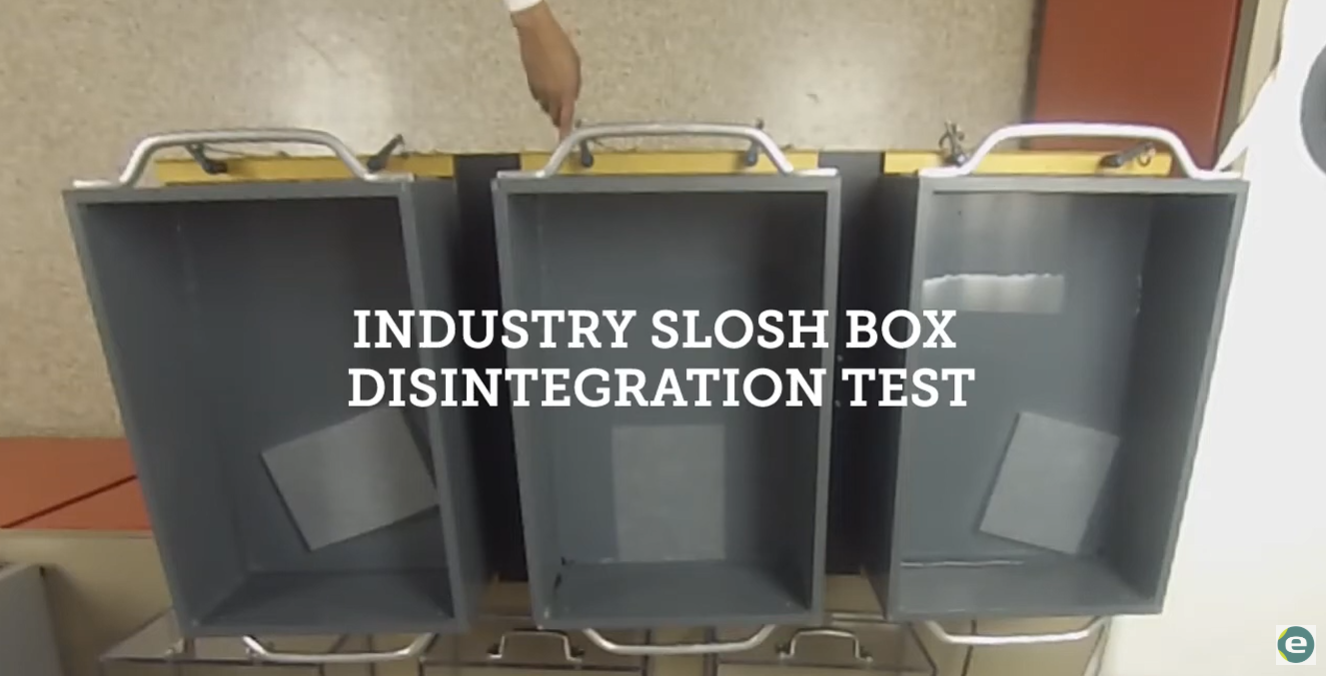
slosh_box_test

How are wet wipes made?

make_nonwoven